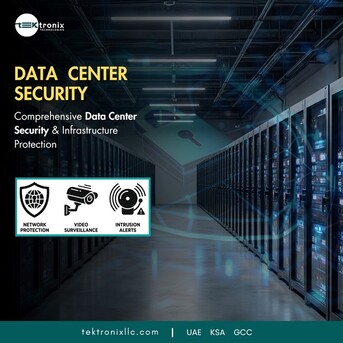
Strengthening Data Center Security Against Modern Threats In Kuwait & GCC
📍 Dubai
🕐 3 months ago
👁 7,495 views
AED 0
Description
Data Center Security has never been more urgent for enterprises and government entities operating in Kuwait and across the Gulf. As organizations accelerate their digital transformation agendas — migrating mission-critical workloads to co-location facilities, hybrid clouds, and on-premises data halls — the attack surface expands in direct proportion. From state-sponsored cyber intrusions targeting Kuwait's energy sector to ransomware campaigns crippling GCC financial institutions, the threat landscape demands a multi-layered, proactively managed security posture. This guide explains why the time for advanced data center security solutions in Kuwait is right now, and what a comprehensive protection framework must look like. 1. The Escalating Threat Environment in Kuwait and the GCC Kuwait's strategic position as a hydrocarbon exporter and regional financial hub makes its digital infrastructure a high-value target. Meanwhile, Saudi Arabia's Vision 2030, the UAE's digital economy initiatives, and Qatar's post-World Cup technology investments have collectively transformed the GCC into one of the world's fastest-growing data centre markets — and one of the most actively targeted by adversaries. Key threat vectors that make advanced Data Center Threat Detection non-negotiable across the region include: • Advanced Persistent Threats (APTs): Nation-state actors routinely probe GCC energy, water, and transport infrastructure. Kuwait's National Cybersecurity Centre (NCSC) has issued multiple threat advisories in the past two years. • Ransomware-as-a-Service (RaaS): Criminal syndicates deploy automated ransomware toolkits that specifically enumerate unsecured data centre endpoints. Recovery costs in the GCC average USD 2.1 million per incident according to regional CISO surveys. • Insider Threats: Privileged users — contractors, visiting engineers, and disgruntled employees — represent the most persistent physical and logical access risk inside co-location and enterprise data halls. • Supply Chain Compromise: Hardware and firmware implants introduced during procurement or maintenance are increasingly discovered in GCC deployments, underscoring the need for tamper-evident physical controls. • Regulatory Non-Compliance Exposure: Kuwait's Communications and Information Technology Regulatory Authority (CITRA) and the Central Bank of Kuwait (CBK) mandate specific data protection and incident response standards. Non-compliance carries substantial financial and reputational penalties. 2. The Six-Layer Security Model: A Framework for GCC Data Centers Tektronix LLC's approach to Data Center Security Kuwait deployments is founded on a defence-in-depth philosophy — multiple independent security layers, each designed to contain and detect threats that bypass the layer above it. This model directly mirrors international frameworks including NIST SP 800-53, ISO/IEC 27001:2022, and the Uptime Institute's Security Operational Excellence (SOE) standard. 2.1 Data Center Firewalls — The Perimeter and Microsegmentation Layer Data Center Firewalls in modern GCC deployments go far beyond traditional north-south traffic filtering. Next-generation firewall (NGFW) platforms — deployed at the perimeter, between network tiers, and as host-based controls — inspect east-west traffic flows inside the data hall, which is where lateral movement attacks proliferate once an initial foothold is established. For Kuwait's financial and government clients, Tektronix LLC implements stateful deep-packet inspection, application-layer visibility, and encrypted traffic analysis (ETA) to detect command-and-control beaconing even within TLS-encrypted sessions. Critical firewall capabilities for GCC enterprise data centers: • Microsegmentation: Workloads are isolated into granular security zones, preventing lateral movement even after a breach • Encrypted traffic analysis: Identifies malware communications hidden within HTTPS/TLS without breaking encryption • Geo-IP blocking and threat-intelligence feeds: Automated blocking of known malicious IP ranges updated in real time • Dual-stack IPv4/IPv6 rule consistency: Eliminates shadow IPv6 paths exploited by attackers in dual-stack environments 2.2 Data Center Encryption — Protecting Data at Rest and in Transit Data Center Encryption is the foundational control that renders stolen data operationally useless to adversaries. For Kuwait's banking sector and government ministries, encryption must be applied across three states: data at rest (storage arrays, backup media, and tape), data in transit (inter-site replication, management traffic, and cloud egress), and data in use (memory encryption for sensitive compute workloads using technologies such as AMD SEV or Intel TDX). Tektronix LLC implements FIPS 140-3 validated encryption modules and hardware security modules (HSMs) for key management, ensuring that cryptographic keys are never exposed in software and that key custodianship complies with CBK and CITRA regulatory requirements. Key lifecycle management — generation, rotation, escrow, and destruction — is automated through an enterprise key management system (EKMS) integrated with the client's identity governance platform. 2.3 Data Center Access Control — Zero-Trust Identity Verification Data Center Access Control in a zero-trust architecture means that neither physical proximity nor network location confers implicit trust. Every access request — whether from a sysadmin at a console, a service account initiating an API call, or a contractor badging into a cage — is authenticated, authorised, and logged against a continuously updated policy engine. For Kuwait and GCC co-location deployments, Tektronix LLC deploys: • Multi-factor authentication (MFA) enforced at every privileged access gateway, including jump servers and out-of-band management interfaces • Privileged access workstations (PAWs) with session recording and keystroke logging for all administrative actions • Biometric and smart-card physical access control integrated with the logical identity provider (IdP) for unified provisioning and de-provisioning • Time-bound, just-in-time (JIT) access for third-party maintenance contractors — eliminating standing privileged accounts Conclusion The question for Kuwait and GCC enterprises is no longer whether to invest in advanced Data Center Security — it is how quickly a comprehensive framework can be put in place. The combination of robust Data Center Firewalls, FIPS-validated Data Center Encryption, zero-trust Data Center Access Control, AI-powered Data Center Surveillance, and behavioural Data Center Intrusion Detection, unified under a 24/7 threat-monitoring SOC, represents the gold standard for protecting mission-critical digital infrastructure in the region. As Data Center Security Kuwait and broader Data Center Security GCC requirements continue to tighten under evolving regulatory mandates and an increasingly sophisticated threat landscape, organisations that act now will establish a durable competitive and compliance advantage. Tektronix LLC's proven six-layered data center security framework is engineered specifically for the Kuwait and GCC environment — contact our sec

Similar Ads

💻 BULK LAPTOPS & CORPORATE IT SOLUTIONS IN DUBAI
Call for Price
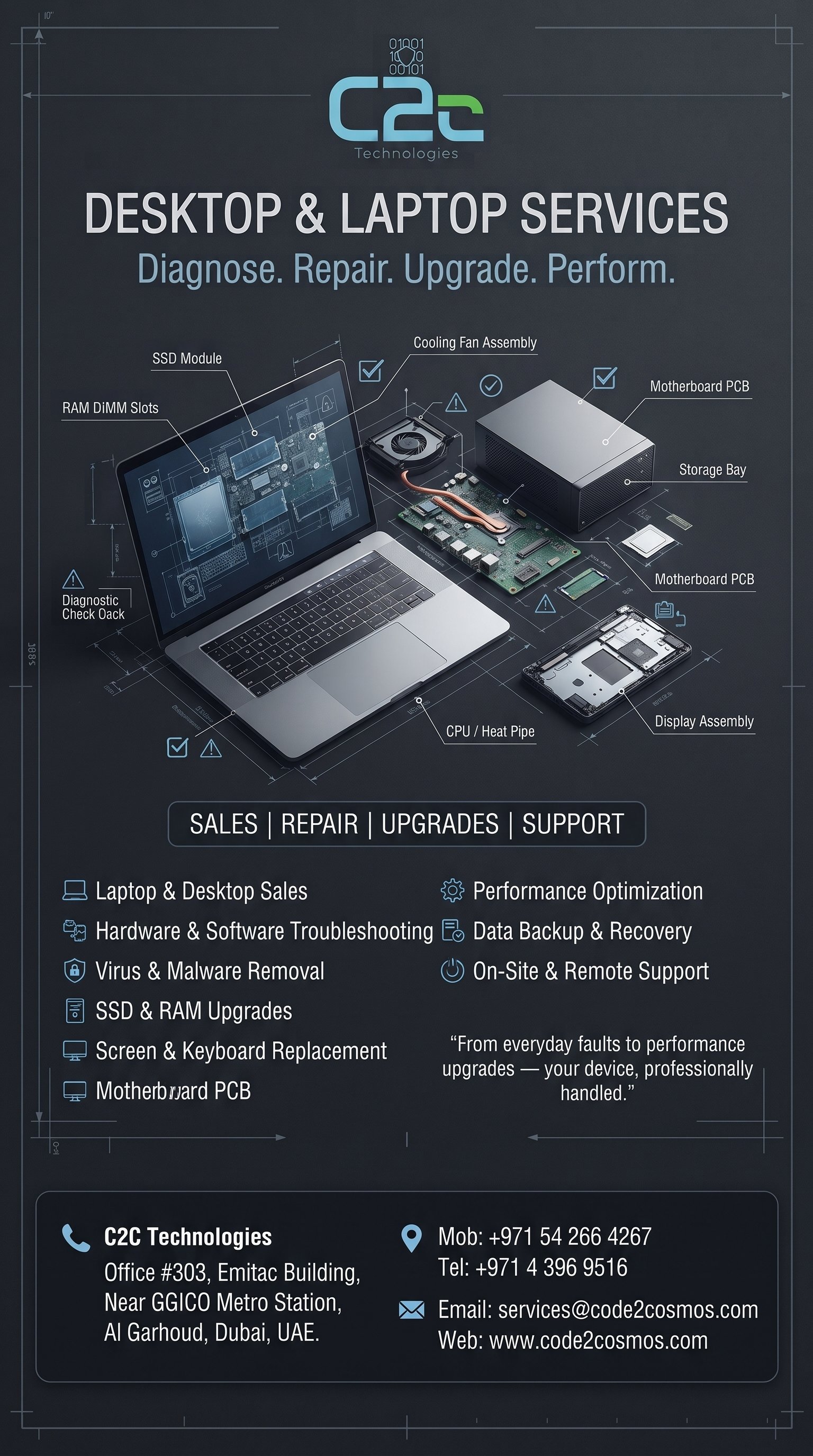
Expert Laptop & Desktop Repairing Dubai – Same-Day Fix
Call for Price
 📷 2
📷 2
Marhaba Advertising
AED 333
💻
iPad Screen Repair Dubai | Professional Apple Repair
AED 223

Become a Full Stack Developer with Java Training in Bangalore!
AED 0

Data Analytics Training in Bangalore | Learnmore Technologies
AED 0
🛡️ Stay Safe
- ✓ Meet in a public place
- ✓ Inspect before paying
- ✓ Never pay in advance